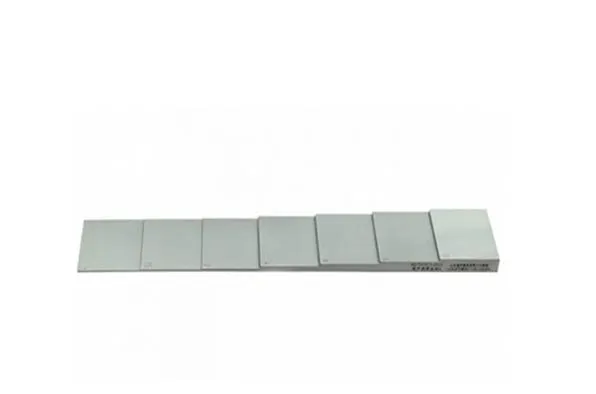
Aluminum Alloy A Type Test Block of Penetration
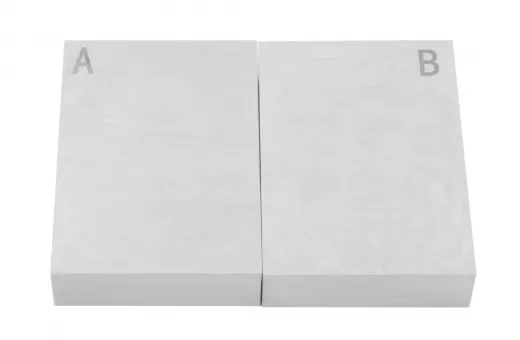
Lanetech Aluminum Alloy A Type block of penetration is used to compare the sensitivity of different penetrants, as well as to compare the sensitivity of new and old penetrants, and to test the corrosiveness of penetrants on aluminum materials.
Applications of Aluminum Alloy A Type Test Block
Penetration testing PT can detect surface defects of non-magnetic materials, providing a supplementary means for magnetic particle testing. Penetration testing method, which involves using a liquid dye on the surface of the test material and keeping it on the surface for a predetermined period of time. The dye can be a colored liquid that can be recognized under normal light, or a yellow/green fluorescent liquid that requires special light to appear. This liquid dye enters the cracks on the surface opening of the material due to capillary action. Capillary action always occurs during the retention of the dye until excess dye is completely washed away. At this point, a certain imaging agent is applied to the surface of the material being tested, penetrating into the cracks and coloring them, thereby revealing. Qualified testing personnel can analyze the visible traces. Penetration testing can be widely used to detect surface opening defects in most non absorbent materials, such as steel, non-ferrous metals, ceramics, and plastics. For complex shaped defects, it can also be comprehensively tested in one go.
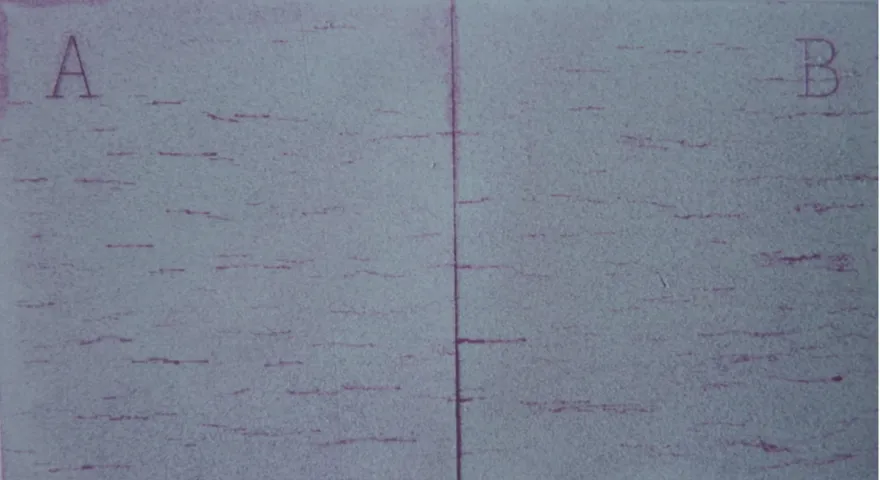
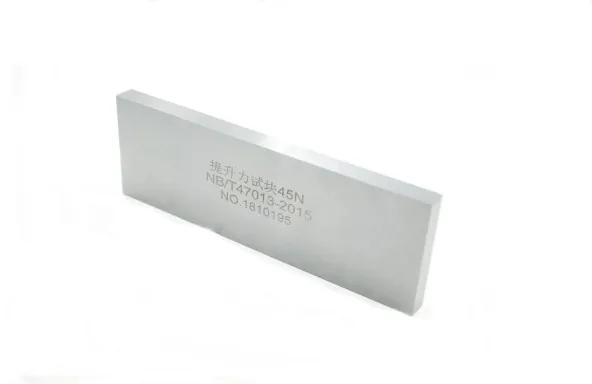
Our company has produced aluminum alloy A-type test blocks, three-point B-type test blocks, and five point B-type test blocks in accordance with the requirements of JB/T6064-2015 and NB/T47013-2015 standards. The crack lines of the test block are clear and visually displayed, which can accurately test the ability of penetrant testing agents and penetrant testing processes to detect small defects.
1. After use, the test block should be thoroughly cleaned with acetone to remove any residual penetrant from the test block. After cleaning, immerse the test block in a sealed container containing acetone or a mixture of acetone and anhydrous alcohol (volume ratio of 1:1) for 30 minutes, dry and store, or use other effective methods for storage.
2. Implement the testing procedure on the test piece according to the instruction manual used for testing. Because dye penetrant can affect the fluorescence effect of fluorescent penetrant, separate test pieces should be prepared for fluorescence and dye penetrant.
Attention: Do not knock the test block to avoid the expansion of defects, which may affect the contrast and sensitivity of the detection.
Features of Aluminum Alloy A Type Test Block
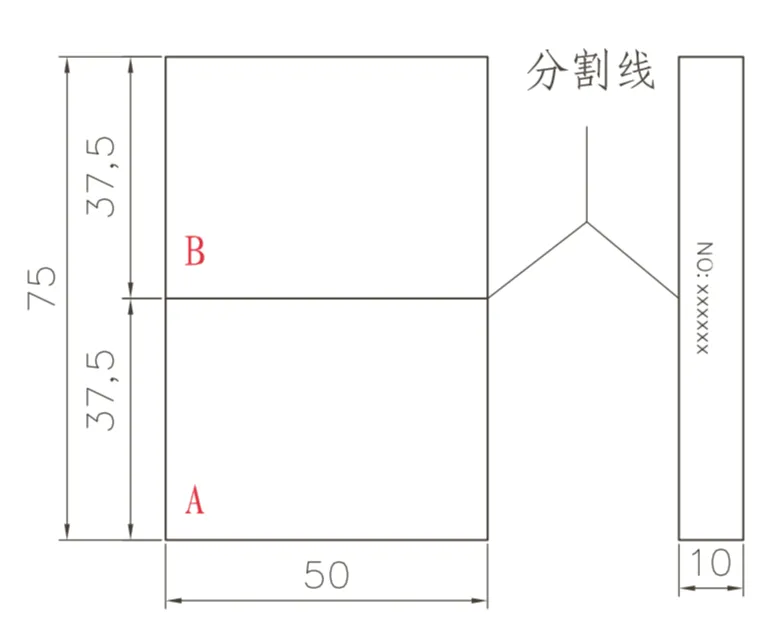
The A-type test block of aluminum alloy is divided into two parts, A and B. The surfaces of the two parts should have irregularly distributed open cracks with widths below 3 μ m, 3 μ m~5 μ m, and 5 μ m. There should be at least 2 open cracks below 3 μ m, and the total number of cracks on a single surface should not be less than 4.
Under normal circumstances, verify whether the penetration testing agent can meet the requirements and compare the performance of two types of penetration agents; Identify penetration testing methods used at non-standard temperatures.
Performance evaluation of testing agents: used to compare the sensitivity of different penetrants, as well as to compare the sensitivity of new and old penetrants, and to test the corrosiveness of penetrants on aluminum materials.
Testing process identification: Identify the penetration testing methods used at non-standard temperatures and determine the testing process specifications.
Monitoring the status of the detection system: It can be used for pre shift verification and on shift inspection to determine whether the working status of the penetrant testing system is normal and to assess whether the operation of the penetrant testing personnel meets the requirements.
Attention:
Cleaning and drying: Before reuse, it needs to be cleaned with a solvent, such as a mascara brush, and then dried for later use; After use, it should be thoroughly cleaned in a timely manner to eliminate all traces of penetrant testing agents as much as possible. It can be soaked in acetone or alcohol for 1-2 hours.
Guidelines for the use of testing agents: The penetrant inspection procedure should be carried out on the test block in accordance with the instructions provided by the testing agent manufacturer.
Test block configuration: Due to the impact of using dye penetrant testing agents on the fluorescence display of fluorescent penetrant testing agents, two sets of test blocks should be provided separately when using fluorescent and dye penetrant testing agents.
Storage: When not in use, the test block should be placed in a dryer or soaked in anhydrous alcohol. If any defects are found and the original characteristics change, they should be replaced in a timely manner.
Dimension of Three-point B type test block
| Size | 75*50mm |
Material | Aluminum alloy |
Standard Delivery
Unit Calibration Test Block | 1 Pcs |
Certification | 1 Pcs |
Suitcase | 1 Pcs |
Related Blocks and Spare parts


 français
 Español
 русский
 العربية
 português